
Rotobrush Air Duct Cleaning in North San Jose: A Homeowner’s Guide
Most homeowners in North San Jose don’t think about their ducts until the dust returns a week after cleaning. The Rotobrush name gets thrown around a lot, but few people understand what the machine actually does. Here’s the straight answer: Rotobrush is a rotary brush system that spins bristles inside your ducts while a powerful vacuum pulls debris out at the same time. It’s not magic, it’s mechanics, and whether it works well depends on the machine’s condition and the person running it. Knowing how it’s supposed to work is the only way to tell if you’re getting a real cleaning or a dust-shuffling show. If you’d rather skip the research and just get it done right, call (855) 506-8636.
A Rotobrush system in poor condition, or one run by an undertrained technician, can redistribute debris rather than remove it. The brand name on the truck means far less than what’s happening inside the hose. In our experience, homeowners who understand the basics can spot the difference in the first ten minutes of a job.
How a Rotobrush Machine Actually Works
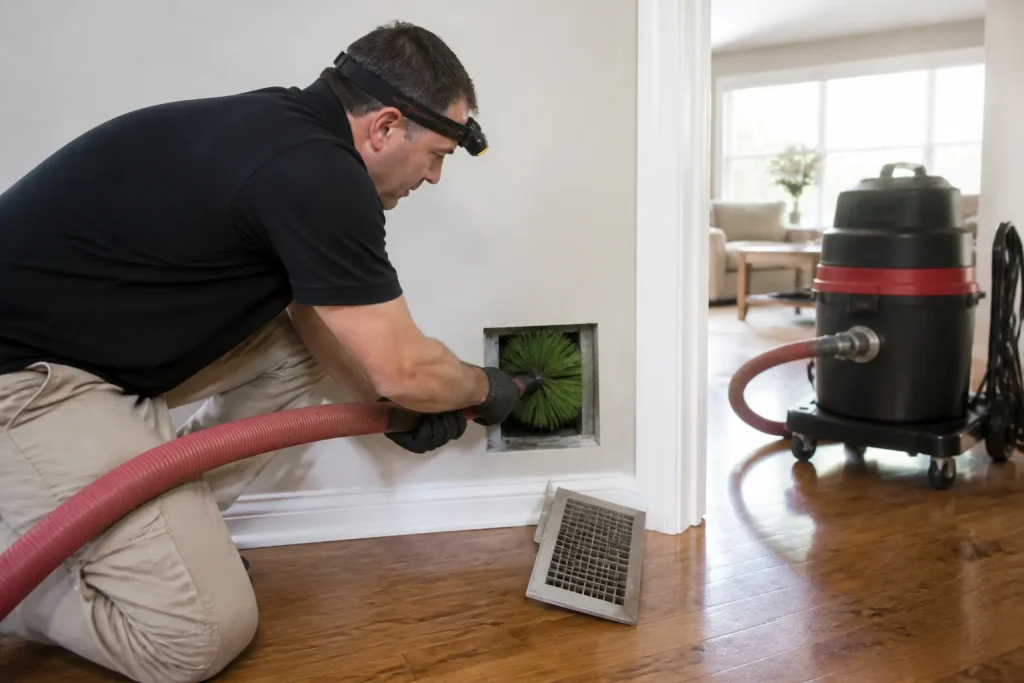
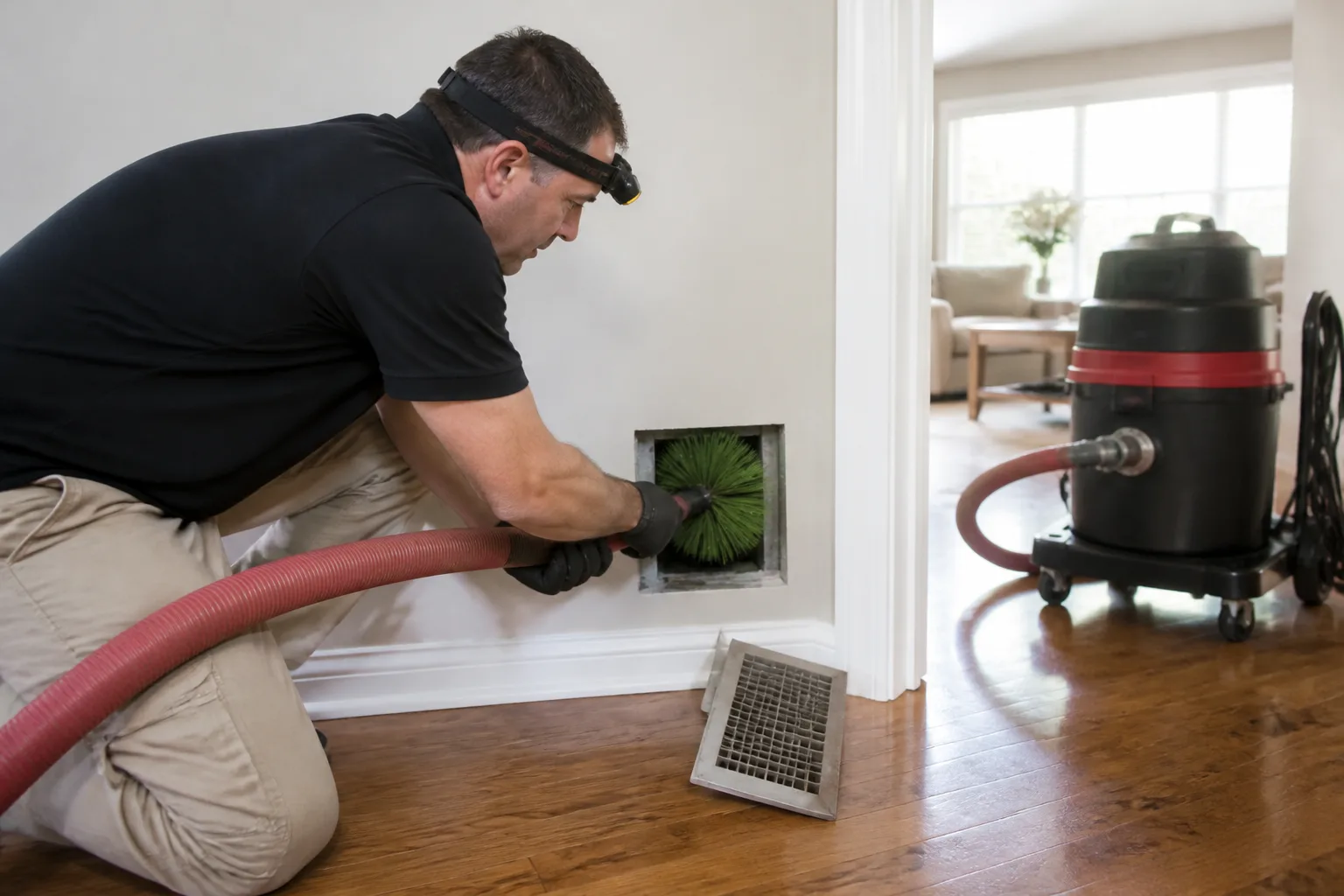
Rotobrush combines two actions in one pass. A spinning brush head, typically nylon or poly bristles, agitates the interior walls of the duct. At the same time, the machine’s vacuum pulls the loosened debris out through the hose and into a collection system. The brush knocks loose what’s stuck; the vacuum removes it before it re-settles. That simultaneous action is the whole point. A brush without adequate vacuum just stirs dust into the air and lets it fall right back onto the duct floor.
The technical spec that matters most is the vacuum’s draw rate, measured in CFM, or cubic feet per minute. Higher CFM means stronger negative pressure in the duct, which means debris is captured rather than disturbed. When a system has a weak draw rate, the brush acts like a broom in a windstorm. It moves dust around but doesn’t remove it. That’s why Elmwood Air Duct Cleaning runs professional Rotobrush and Nikro systems with serious vacuum capacity, not consumer shop-vac setups that struggle to maintain negative pressure through long flex runs.
In North San Jose, where homes from the 1980s through the 2000s often have long flex duct runs, vacuum strength matters twice as much. Longer runs mean more distance for debris to travel, and more opportunity for it to drop out of the airstream if the draw rate isn’t sufficient.
Rotobrush BioSpin vs. Standard Rotary Brush Systems
Rotobrush makes more than one kind of cleaning head. The BioSpin line is a specific tool designed for certain duct materials and debris types. Standard rotary brush heads work well on smooth metal ducts where compacted dust and light debris are the main issue. BioSpin heads are suited to fiberglass-lined ducts or situations where biological growth, including mold or mildew, needs mechanical agitation with a different bristle configuration.
The key difference is in the brush material and the aggressiveness of the agitation. Standard brushes are workhorses for routine debris. BioSpin heads are more specialized, often used when the goal includes removing surface growth that regular bristles wouldn’t adequately disturb. An honest technician will tell you which tool fits your ducts, not just grab whatever is already attached to the machine.
Flex duct, which is common throughout North San Jose housing stock from the 1980s onward, needs careful speed control regardless of which head is used. Flex duct has a plastic liner inside a wire coil. Spin too fast, or use a brush with overly stiff bristles, and you can tear the liner. A torn liner means air leaks, reduced efficiency, and a path for dust to enter the air stream after cleaning. Proper technique means matching brush diameter to duct diameter and keeping the travel speed slow enough to clean without shredding.
Questions That Reveal Whether the Job Will Be Done Right
You don’t need to be an HVAC technician to evaluate one. You need to ask a few pointed questions and listen to whether the answers show real knowledge or scripted sales talk. Here’s what we’d ask if we were hiring someone in North San Jose:
- What brush diameter are you using for my ducts? Ducts come in different sizes. A brush too small just polishes the center of the duct and leaves the corners packed. A brush too large risks damage. The answer should be specific to your home, not a shrug.
- What’s your vacuum CFM rating? A legitimate professional will know this number for their equipment. If they can’t answer, or they talk around it, that’s a red flag. Real Rotobrush systems paired with proper vacuums pull in the hundreds to thousands of CFM range depending on the setup.
- How do you verify negative pressure? Negative pressure means air is being pulled from inside your home into the duct system and out through the vacuum, not blowing dust back into the living space. A competent technician will explain how they set up their containment and confirm draw before they start.
- How long will the job take? A legitimate cleaning of a typical North San Jose home takes hours, not minutes. We’ll get into time expectations below, but anyone promising a whole-house job in forty-five minutes is not using the equipment the way it’s designed to be used.
Why Flex Duct in North San Jose Homes Needs Special Care
The construction boom in this part of the Bay Area from the 1980s into the 2000s produced thousands of homes with flexible ductwork. Flex duct is inexpensive to install and easy to route through tight attic spaces, which is why builders used it so extensively. It also has a tender inner liner that doesn’t tolerate aggressive mechanical cleaning.
Rotobrush cleaning is actually well-suited to flex duct when run properly. The rotating brush can reach into the ribbed walls of the liner and dislodge dust that a vacuum alone would never pull out. But the travel speed has to be controlled. Moving the brush head too quickly down the duct reduces the dwell time, meaning the bristles don’t make enough contact to clean effectively. It also increases the chance of the brush catching on the liner seam and causing a tear.
The right approach in a typical North San Jose attic is methodical. The technician should work section by section, advancing the brush slowly, with continuous vacuum running the entire time. No yanking, no racing. We also inspect flex duct for existing damage before we start. Sometimes a duct is already compromised, and cleaning it without repair would just make the problem worse. That’s one reason air duct cleaning and repair are offered together at Elmwood, so a found problem gets fixed rather than cleaned around.
How Long Should a Real Rotobrush Job Take?
Time is one of the most reliable honesty detectors in this industry. Real duct cleaning takes real time. The equipment has to be set up, containment established, each register accessed, every run cleaned, and the system sealed back up. There are no shortcuts that produce a better result.
For a typical single-family home in North San Jose, somewhere in the 1,500 to 2,500 square foot range, a legitimate full-system cleaning should take between three and five hours. Larger homes, or homes with complex duct layouts, can run longer. Multi-story homes take longer still because the technician is moving equipment between floors and accessing registers in more locations.
If a quote comes in for ninety minutes, the math doesn’t work. Even a small home with a simple layout takes time just to set up the vacuum, attach the access ports, and clean each run properly. That’s before counting the return side, the main trunk, and any cleaning of the plenum. When you hear a time that seems too fast, trust your instincts. A Rotobrush machine can’t clean a house properly at highway speed, and neither can a technician.
We’ve also worked on homes where Aprilaire and Honeywell filtration systems are integrated into the HVAC setup. Those systems benefit from clean ducts upstream, but the cleaning process has to respect the equipment already in place. The technician should understand how to isolate the filtration system during duct cleaning so the work doesn’t damage it or force debris into the filter media.
When to Call a Pro
Some home maintenance tasks lend themselves to weekend DIY. Duct cleaning is not one of them. The equipment needed to do this correctly costs more than most homeowners will spend on ten professional cleanings, and the skill to run it without damaging flex duct comes from training and repetition. If you see significant dust buildup, have never had the ducts cleaned, or moved into a North San Jose home that shows signs of prior remodeling dust, calling a professional is the sound decision.
You can also call us if you’ve had a cleaning done before but the dust returned quickly. That’s often evidence that the previous job didn’t remove debris, just relocated it. We repair what we find, not just clean around it. That repair capability has become more relevant as North San Jose homes age, and duct runs that were installed decades ago show their years.
Related services in North San Jose: Dryer vent cleaning is a separate safety service that addresses lint buildup, a leading cause of residential dryer fires.
The Bottom Line
Rotobrush is not an upgrade. It’s the baseline method for cleaning residential ducts properly, especially the flex duct common in North San Jose’s 1980s through 2000s housing. The machine matters, but the technique matters more. A well-maintained Rotobrush system with strong vacuum draw, run by a technician who selects the right brush diameter and controls travel speed, will remove debris from your ducts. The same machine in careless hands just moves dust around. Ask about draw rate, brush size, and expected job time. If the answers don’t sound like someone who understands the equipment, get a second opinion. If you’re in North San Jose and want the work done right the first time, Elmwood Air Duct Cleaning offers free estimates. Call (855) 506-8636.
Frequently Asked Questions
Yes, when the technician controls brush speed and selects the right diameter. Flex duct liners can tear under aggressive agitation, so the operator should advance the brush slowly and verify the brush size matches your duct dimensions. An experienced technician in North San Jose will know to slow down on the ribbed plastic liner common in homes built from the 1980s through the 2000s. Call (855) 506-8636 if you want an evaluation of your flex duct before cleaning.
Pricing is set per job by a written estimate after assessing your home’s duct layout and size. Free estimates mean no charge to have a technician evaluate your system. Call (855) 506-8636 for an exact quote. We answer 24/7. Fast dispatch from 7am to 7pm, Sunday through Friday.
This usually means the previous cleaning didn’t remove the debris properly. If the vacuum draw rate was weak or the travel speed too fast, dust was agitated but not extracted, and it settled back as soon as the system ran. Proper Rotobrush cleaning with adequate negative pressure prevents this re-deposit cycle. We repair what we find, not just clean around it.
Cleaner ducts mean fewer particulates being pushed through your registers when the HVAC runs. That can reduce the load on your home’s air, especially if you run Honeywell or Aprilaire filtration systems. But duct cleaning isn’t a medical treatment. It addresses the mechanical source of dust circulation. Call (855) 506-8636 for a free assessment of whether your ducts are a significant contributor.
Written by the team at Elmwood Air Duct Cleaning, serving North San Jose since 2018.
Need Air Duct Cleaning Help?
Call Elmwood Air Duct Cleaning - licensed & insured, here with fast help in North San Jose.
(855) 506-8636