
Emergency Air Duct Cleaning Near Me: What North San Jose Homeowners Should Do First
If smoke, sewage odor, or visible mold has entered your duct system, the single most expensive mistake you can make is turning the HVAC back on before a specialist assesses the situation. That one flip of the thermostat distributes contamination through every register in the house, turning a contained problem into a whole-home remediation job. Your first move is to shut the system down at the thermostat and the breaker, then work through the steps below. If you’d rather not handle this yourself, call (855) 506-8636. We answer 24/7.
What Actually Counts as a Duct Emergency in North San Jose
Most calls we get labeled “emergency air duct cleaning near me” fall into one of two buckets: genuine emergencies and urgent-but-not-emergency situations. Knowing which one you’re dealing with changes what you do in the next hour. A genuine emergency means the air moving through your ducts is actively unsafe or the ductwork itself is compromised. The urgent category covers things you should address this week, not before you go to bed tonight.
Here’s how we separate them:
- Post-fire smoke contamination: Smoke particles are acidic and fine enough to lodge deep in duct walls. Running the system pushes soot into every room. This is a true emergency.
- Sewage backup into a return air vent: Biological contamination is present and the air handler can aerosolize pathogens. Emergency, no question.
- Rodent intrusion with nesting material or droppings in ductwork: Hantavirus and other biological risks mean you don’t want airflow passing through that space. Emergency.
- Water intrusion into ducts after a leak or minor flood: Moisture inside ductwork breeds mold within 48 to 72 hours in North San Jose’s climate. Urgent, and the drying process matters as much as the cleaning.
- Sudden dust blowout after construction or a remodel: Annoying and worth addressing quickly, but rarely an emergency. Shut the system off, change the filter, and book a cleaning.
North San Jose homes built in the 1960s through the 1980s often have rigid metal ducts, which handle contamination differently than the flexible ducts common in newer construction. Metal ducts can usually be cleaned thoroughly after smoke or biological contamination. Flex ducts often need replacement rather than cleaning when biological material is present, because the inner liner holds onto contaminants in ways a rotary brush can’t fully reach. That’s a distinction that changes the quote you’ll get, and it’s one reason we ask about duct material before anyone drives out.
The First Hour: A Step-by-Step Sequence
The order matters. Skipping step one because you want to check how bad the smell is in the bedroom is exactly how a small contamination event becomes a whole-house problem. Here’s the sequence we recommend to every North San Jose homeowner who calls us mid-panic.
- 1
Shut the HVAC off at the thermostat. Set it to “off,” not just a higher or lower temperature. The fan must stop moving air.
- 2
Kill power at the breaker. Find the breaker labeled for the furnace or air handler and flip it. This prevents the system from cycling on automatically, which some smart thermostats and zone controllers can do.
- 3
Close interior doors to contain the affected area. If the contamination source is in one room, shut that door and block the gap underneath with a towel if the room has a return vent.
- 4
Open windows in the affected area only. Ventilate downward pressure so airborne particles exit the house rather than drifting into clean rooms. Don’t run bathroom or kitchen exhaust fans, because those can draw air through the duct system.
- 5
Document what you see and smell. Photograph visible debris at registers, note which rooms have odors, and record when the event happened. This matters for insurance claims and it helps the technician bring the right equipment.
- 6
Call a company that asks questions before quoting. A credible provider will want to know your duct material, home age, HVAC location, and what triggered the event. If someone quotes a flat price without asking anything, keep dialing.
We’ve walked North San Jose homeowners through this sequence enough times to know it feels excessive in the moment. It isn’t. The ten minutes you spend killing the breaker and closing doors can save you from replacing soft goods in every bedroom.
What to Have Ready Before You Call
Technicians arrive prepared when you give them real information, and they show up cold when you don’t. That’s not a small difference when dealing with contaminated air. Here’s what a thoughtful homeowner gathers before picking up the phone:
- Duct material: Rigid metal, flex duct, or a mix. If you don’t know, look at a visible register where the boot meets the floor. Metal shines. Flex duct looks like a foil-covered slinky.
- Home age and recent renovations: Construction dust behaves differently than smoke. A 1970s tract home in North San Jose has different duct realities than a 2010s condo.
- HVAC system location: Garage, attic, or closet. Attic units in North San Jose sit in heat that affects how quickly moisture dries out.
- The triggering event: Fire, water, sewage, rodent, or a renovation kick-up. Lead with this.
- Filtration you’re running: If you have an Aprilaire or Honeywell whole-home filtration system, say so. It changes how we assess what reached the ducts versus what the filter caught.
You don’t need to inspect your own ductwork with a flashlight. Actually, don’t open sections of duct yourself, especially after biological contamination. You can disturb material and spread it. Gather the information above, stay out of the affected rooms, and let a professional with proper containment equipment handle the inspection.
Why “Cleaning” Isn’t Always Step One
This is the part most emergency marketing skips, and it matters more than most homeowners realize. In some situations, cleaning the ducts first makes the problem worse or simply wastes your money. The sequence has to match the contamination type.
After a sewage backup, the duct system needs sanitization and possibly replacement of affected sections before any cleaning makes sense. Running a rotary brush through ducts with biological contamination can aerosolize material that should be contained first. After water intrusion, structural drying comes before cleaning. Cleaning a wet duct just moves wet debris around and does nothing for the moisture trapped in insulation or the air handler. North San Jose’s mild winters and dry summers help with drying times, but a duct that’s been wet for more than 48 hours needs professional drying assessment, not just a cleaning appointment.
After a fire, the situation depends on what burned. Light smoke from a cooking incident often cleans out successfully with professional equipment. Heavy structural fire smoke with soot deposits may require duct replacement in sections, particularly if flex duct is involved. Soot is corrosive and fine enough to work into the fibers of flex duct liners. A company that promises to “clean it all out” without seeing the system or asking about duct material is guessing at your expense.
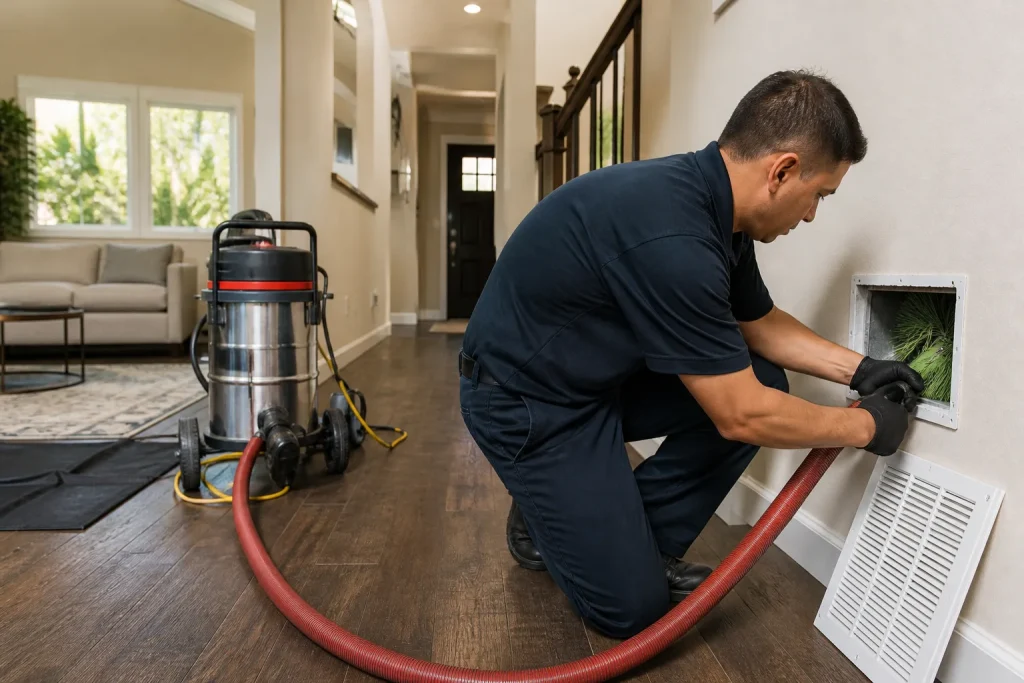
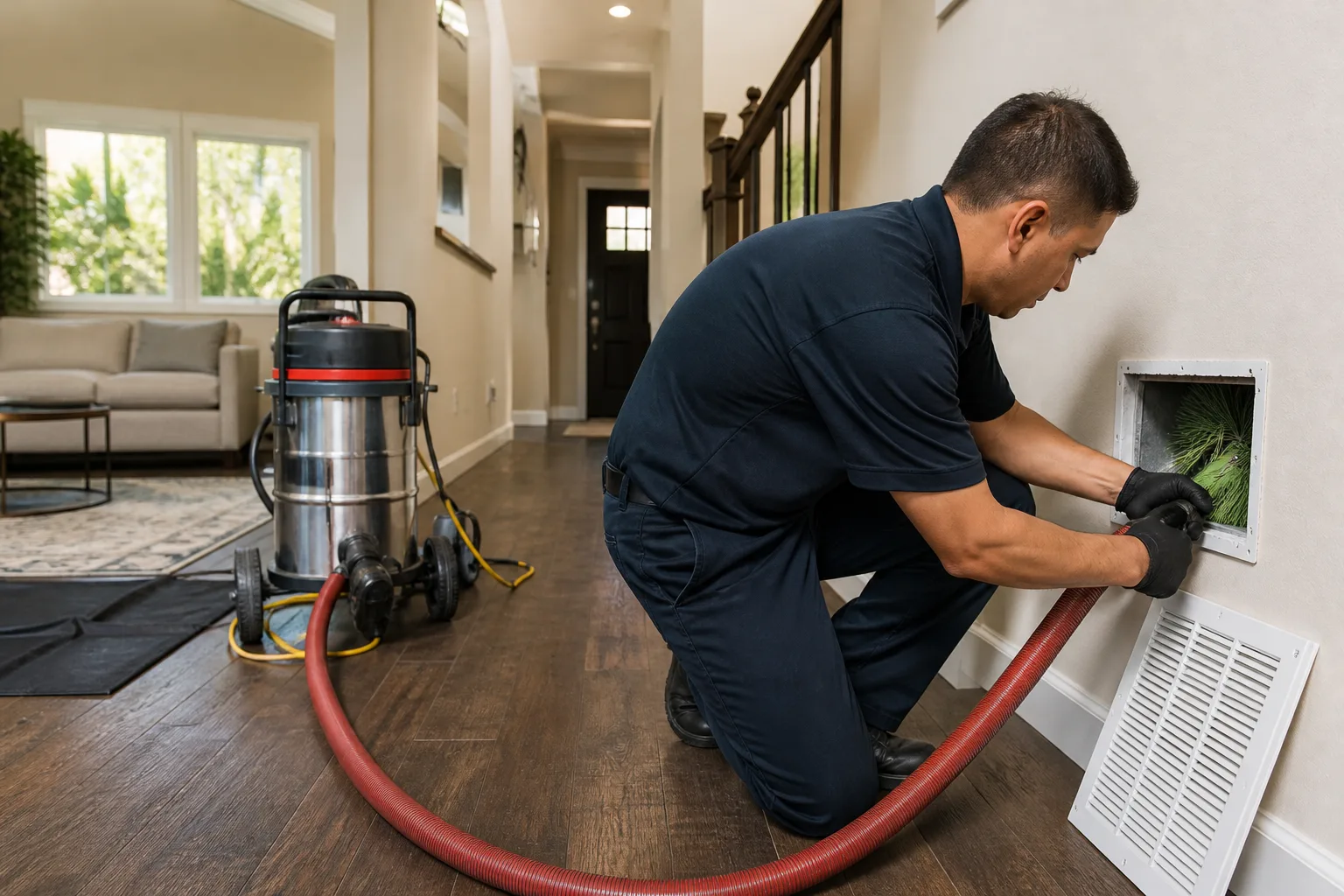
We carry Elmwood Air Duct Cleaning equipment that includes Rotobrush rotary-brush systems and Nikro HEPA-rated vacuums, and we also work with Abatement Technologies gear for fine particulate situations. That equipment matters, but so does the judgment to say “this section needs replacement, not cleaning.” Air duct cleaning done right is part of a sequence, not a standalone fix for every problem. When we find compromised ductwork, we repair what we find rather than cleaning around it. That’s the difference between addressing the source and polishing the symptom.
How to Spot a Real Same-Day Provider in North San Jose
The phrase “emergency air duct cleaning” gets used as a marketing hook by companies that have no actual rapid-response capability. Here’s how to separate the credible from the cosmetic before you waste an hour on hold.
A credible provider answers the phone when you call. Not a call center that takes a message. Not a voicemail that promises a callback. The phone line should be answered by someone who can talk about your specific situation. We answer 24/7. Fast dispatch from 7am to 7pm, Sunday through Friday. That’s the difference: phone coverage is one thing, actual crew availability is another. A company can claim “emergency service” on a website while having no crews available until Tuesday. Ask directly: “When is your next available dispatch window?” A straight answer tells you what you need to know.
A credible provider asks questions before quoting. Duct material, home age, system location, trigger event. If the first question is about your credit card, that’s a red flag. A credible provider sends technicians with professional equipment. Rotobrush and Nikro systems are industrial-grade tools that most generalist companies don’t own. That’s not snobbery; it’s physics. Compacted debris inside duct walls doesn’t come out with a shop vac and good intentions.
A credible provider in North San Jose shows up with a written estimate and sets the price per job before work starts. The estimate is free. You agree to one flat price for the system before anyone touches a register. If the scope changes because the technician finds something the estimate didn’t cover, you approve the change before extra work happens. Anyone who won’t put the price in writing before starting is playing a game you don’t want to join.
When Duct Cleaning Isn’t What You Need at All
Sometimes the emergency call is actually a dryer vent situation, and getting that wrong wastes a trip. A burning smell near the laundry room, visible lint buildup at the exterior vent, or clothes taking longer to dry are all signs of a restricted dryer vent, not a ducted HVAC problem. Dryer vents are a leading cause of residential fires, and dryer vent cleaning is a standalone safety service, not an add-on we mention at the end of a duct job. If your emergency involves the dryer, say so when you call. It changes the equipment and the approach, and it saves you from waiting for a duct technician when the real fire risk is in the laundry room.
Similarly, if you run Aprilaire or Honeywell whole-home filtration, part of the emergency response may involve checking whether the filtration system caught the contaminant before it reached the ducts. These brands integrate with the HVAC system in ways that affect how contamination moves. Knowing what you’re running helps us give you an accurate read on what actually happened. Better air starts at the source, and sometimes the source is a filter that did its job and now needs replacement.
The Bottom Line
Every duct emergency has the same first step: shut the system down at the thermostat and the breaker. Then contain the affected area, ventilate selectively, document what you see, and call a provider who asks real questions. The sequence matters because running the system even once after contamination spreads the problem from one room to every room. Understand what type of emergency you’re dealing with, because post-fire smoke, sewage backup, rodent intrusion, and water damage each need a different initial response than plain construction dust. And remember that cleaning isn’t always step one. Sometimes repair, drying, or replacement has to happen first, and a company that can handle all three under one roof saves you the circus of multiple vendors.
If you’re in North San Jose and need help, air duct cleaning through Elmwood includes free estimates. Call (855) 506-8636. We answer 24/7. Fast dispatch from 7am to 7pm, Sunday through Friday.
Frequently Asked Questions
We answer 24/7. Fast dispatch from 7am to 7pm, Sunday through Friday. A call outside dispatch hours is booked into the next opening. The phone line is always answered by a person, never a voicemail tree. Call (855) 506-8636 and we’ll tell you exactly when a technician can be there.
Shut it down now. Don’t run it again. Contamination that moved through the system can often be cleaned from duct surfaces, but the more you run the fan, the more surfaces are affected. We can assess what actually spread once the system is off. The estimate is free and the price is set per job in writing.
It depends on the contamination. For biological contaminants, sewage, or heavy smoke, you’ll likely want to be out of the house during the containment and removal process. We’ll tell you before work starts based on what we find. For routine dust and debris, staying home is usually fine. Your safety comes first, and we’ll be direct about what we recommend.
Many policies cover duct cleaning when the contamination resulted from a covered event like a fire, water damage, or sewage backup. Documentation matters, which is why we recommend photographing everything before anyone arrives. We can work with your insurer and provide the documentation they need for the claim. The final price is set per job by written estimate, and we walk through what insurance needs before work begins.
Written by the team at Elmwood Air Duct Cleaning, serving North San Jose since 2018.
Need Air Duct Cleaning Help?
Call Elmwood Air Duct Cleaning - licensed & insured, here with fast help in North San Jose.
(855) 506-8636